

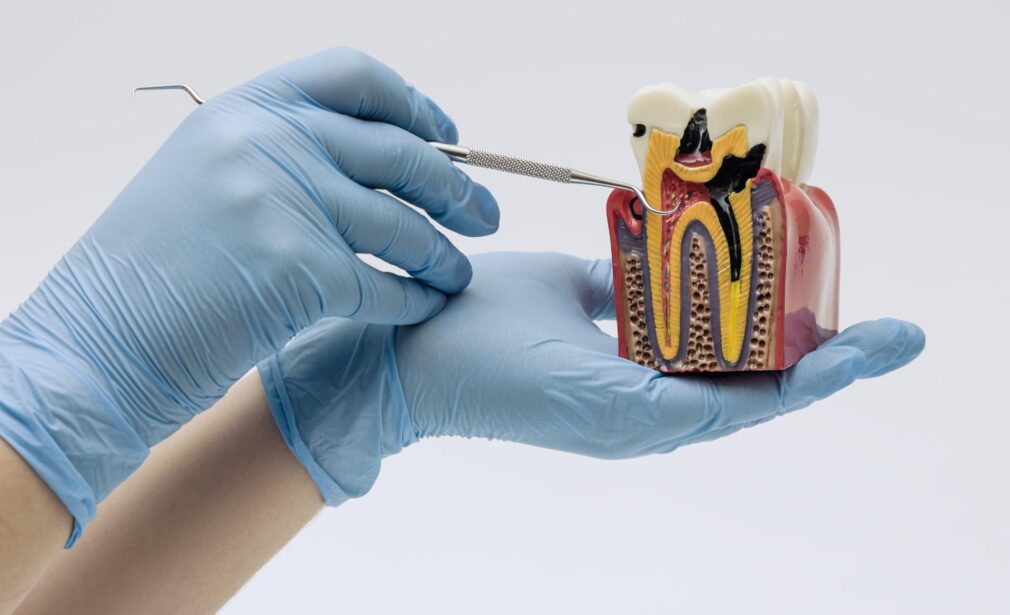
Save Your Natural Tooth with Advanced and Comfortable RCT
Severe toothache, prolonged sensitivity or swelling may indicate inflammation or infection inside a tooth. Root canal treatment in Chandigarh can remove the infected tissue, relieve discomfort and help preserve your natural tooth.
Hollywood Smile provides personalized root canal treatment under the guidance of Dr. Prashant, MDS Endodontist with more than 15 years of experience. Our approach focuses on accurate diagnosis, patient comfort and long-term protection of the treated tooth.
BOOK A ROOT CANAL CONSULTATION
Call: +91 82888 38222
What Is Root Canal Treatment?
Root canal treatment, also called RCT or endodontic treatment, is a dental procedure used to treat infection or inflammation inside a tooth. The centre of every natural tooth contains soft tissue called dental pulp, which includes nerves and blood vessels.
When the pulp becomes infected or irreversibly damaged, the dentist removes the affected tissue, cleans and disinfects the root canals, fills them with a suitable material and seals the tooth.
The purpose of root canal therapy is to control infection and save a natural tooth that might otherwise require extraction. The American Dental Association confirms that root canal treatment can preserve teeth affected by inflamed or diseased dental pulp.
When Do You Need Root Canal Treatment?
Root canal treatment may be required when decay, injury or infection reaches the dental pulp. A clinical examination and dental X-ray are generally needed to determine whether RCT is appropriate.
Severe or Persistent Toothache
Continuous or recurring tooth pain may indicate that the pulp inside the tooth is inflamed or infected. The pain may become more noticeable while chewing, biting or lying down.
Sensitivity to Hot and Cold
A tooth that remains sensitive for a prolonged period after consuming hot or cold foods may require professional evaluation by a dentist or root canal specialist.
Pain While Biting or Chewing
Pain when pressure is applied to a tooth can be associated with decay, a crack, pulp inflammation or infection around the root.
Swelling Around the Tooth
Swollen or tender gums near a painful tooth may indicate infection. In some cases, a small pimple or boil may appear on the gum.
Deep Tooth Decay
An untreated cavity may progress through the outer tooth layers and reach the dental pulp. Deep decay is one of the common reasons for root canal treatment.
Cracked or Chipped Tooth
A crack or injury can allow bacteria to enter the tooth and damage the pulp, even when there is no visible cavity.
Darkening of the Tooth
A tooth may become darker after trauma or internal pulp damage. Discolouration alone does not confirm that RCT is required, so a professional examination is necessary.
Deep decay, repeated dental procedures, a faulty crown and cracks or chips are recognised reasons why the dental pulp may become inflamed or infected.
Root Canal Treatment Procedure
The exact procedure depends on the affected tooth, number of root canals and severity of infection. A typical root canal procedure involves the following stages.
1. Dental Examination and X-Ray
The dentist examines the affected tooth, discusses your symptoms and may take a dental X-ray. The X-ray helps evaluate the roots, surrounding bone and extent of infection.
2. Local Anaesthesia
Local anaesthesia is administered to numb the tooth and surrounding area. This helps make the root canal procedure comfortable for the patient.
3. Isolation of the Tooth
The tooth may be isolated to keep the treatment area clean and dry. Proper isolation also helps prevent saliva and bacteria from entering the tooth during treatment.
4. Removal of Infected Dental Pulp
A small opening is created in the tooth. The inflamed, infected or damaged pulp tissue is then carefully removed from the pulp chamber and root canals.
5. Cleaning and Shaping
The root canals are cleaned, disinfected and shaped using specialized endodontic instruments. This stage removes bacteria and prepares the canals for filling.
6. Filling the Root Canals
After cleaning, the prepared canals are filled with a biocompatible dental material and sealed to reduce the risk of reinfection.
7. Temporary or Permanent Filling
The opening in the tooth is closed with a temporary or permanent filling, depending on the treatment plan and condition of the tooth.
8. Dental Crown Placement
A tooth may become structurally weaker after extensive decay and root canal treatment. A dental crown may therefore be recommended to protect the tooth and restore its appearance and chewing function.
Root canal treatment generally involves removing infected pulp, cleaning and filling the canals, and restoring the tooth with a filling or crown.
Is Root Canal Treatment Painful?
Many patients delay treatment because they believe RCT is extremely painful. However, modern root canal treatment is performed under local anaesthesia, which numbs the treatment area.
Most patients experience little or no pain during the procedure. Root canal therapy is intended to relieve the pain caused by infected or inflamed dental pulp.
Some tenderness or sensitivity may occur after treatment, especially when the tooth was painful or infected beforehand. This usually improves as the surrounding tissues heal.
The American Association of Endodontists describes modern root canal treatment as a virtually pain-free procedure that can involve less recovery discomfort than tooth extraction.
Benefits of Root Canal Treatment
Saves the Natural Tooth
The most important benefit of RCT is that it can preserve a tooth that might otherwise need to be removed.
Relieves Infection-Related Pain
Removing the inflamed or infected pulp addresses the source of persistent tooth pain and sensitivity.
Restores Chewing Function
After the tooth is properly restored with a filling or crown, it can continue to support normal biting and chewing.
Maintains Natural Tooth Alignment
Saving the tooth helps prevent a gap that could allow neighbouring teeth to shift from their positions.
Helps Avoid Tooth Replacement
Preserving the natural tooth may eliminate the immediate need for a dental bridge, implant or removable replacement.
Restores Smile Appearance
A dental crown can restore the shape, strength and visible appearance of a damaged or discoloured tooth.
Single-Sitting Root Canal Treatment
A single-sitting root canal may be completed in one appointment when the tooth’s condition and clinical circumstances allow it. During the visit, the dentist cleans, shapes, disinfects and fills the root canals.
However, single-visit RCT is not suitable for every patient. Teeth with extensive infection, complicated root anatomy or other concerns may require multiple appointments.
The decision between a single-sitting RCT and multiple-visit root canal treatment should be based on professional clinical evaluation rather than convenience alone.
Root Canal Treatment for Front Teeth
Front teeth commonly have fewer root canals than back teeth, but they require careful treatment because they are highly visible when you smile.
After root canal treatment, a front tooth may require a tooth-coloured restoration or dental crown, depending on how much healthy tooth structure remains.
Patients searching for front-tooth root canal treatment in Chandigarh should arrange an examination if they experience pain, trauma, sensitivity or tooth discolouration.
Root Canal Treatment for Molars
Molars are the back teeth used for heavy chewing. They may contain multiple roots and canals, making treatment more complex.
A molar affected by deep decay or infection may require detailed cleaning and shaping of each canal. A dental crown is frequently considered after molar root canal treatment to protect the tooth from fracture and restore chewing function.
An experienced endodontist can evaluate the root anatomy and create an appropriate treatment plan for molar root canal treatment in Chandigarh.
Root Canal Retreatment
A previously treated tooth may occasionally become painful or infected again. Possible reasons include untreated canal anatomy, new tooth decay, a cracked restoration, trauma or leakage around the filling or crown.
During root canal retreatment, the tooth is reopened, the previous filling material is removed and the canals are examined, cleaned, disinfected and refilled.
The American Association of Endodontists explains that retreatment may give a previously treated tooth another opportunity to heal and remain functional.
Root Canal Treatment vs Tooth Extraction
Root canal treatment aims to save the natural tooth, while extraction removes it completely. When a tooth can be predictably restored, preserving it may help maintain natural chewing, bite balance and tooth alignment.
After extraction, the resulting gap may require replacement with a dental implant, bridge or removable denture. These treatments may involve additional appointments and procedures.
However, not every tooth can be saved. Extraction may be recommended when a tooth is severely fractured, has inadequate support or cannot be restored successfully. The appropriate choice should be made after a complete clinical and radiographic examination.
How Many Appointments Does RCT Require?
Root canal treatment may be completed in one or more appointments. The number of visits depends on:
- The severity of infection
- The tooth being treated
- The number and shape of root canals
- Previous treatment on the tooth
- Presence of swelling or drainage
- Condition of the surrounding tissues
- Need for a dental crown
Your dentist will explain the expected number of visits after examining the tooth.
Recovery After Root Canal Treatment
Your mouth may remain numb for a few hours after RCT. Avoid eating until the numbness has completely worn off to reduce the risk of accidentally biting your cheek, lip or tongue.
Mild tenderness may occur around the treated tooth during the initial recovery period. Follow the medication and aftercare instructions given by your dentist.
Many patients can return to their usual routine shortly after treatment, although recovery varies between individuals.
Root Canal Aftercare Instructions
Avoid Chewing Until Numbness Wears Off
Do not chew food until normal sensation has returned after local anaesthesia.
Protect the Treated Tooth
Avoid hard, sticky or crunchy foods on the treated side until the tooth has received its permanent filling or crown.
Maintain Oral Hygiene
Continue brushing twice daily and clean between your teeth carefully. Be gentle around the treated area if it feels tender.
Complete the Final Restoration
Do not delay the recommended permanent filling or dental crown. A properly restored tooth is better protected against contamination and fracture.
Attend Follow-Up Appointments
Visit your dentist as advised so the treated tooth and surrounding tissues can be reviewed.
Contact Your Dentist if Symptoms Increase
Seek professional advice if you develop severe pain, increasing swelling, fever, an uneven bite or loss of the temporary filling.
The American Association of Endodontists advises patients to avoid chewing hard foods or biting heavily on a root canal-treated tooth until it has been fully restored.
Root Canal Treatment Cost in Chandigarh
The cost of root canal treatment in Chandigarh depends on the condition and location of the tooth. A fixed price cannot be provided accurately without a dental examination.
Factors that may affect RCT cost include:
- Front tooth, premolar or molar
- Number and complexity of root canals
- Severity of infection
- Primary treatment or retreatment
- Required dental X-rays
- Need for additional appointments
- Type of final filling
- Material selected for the dental crown
- Amount of remaining natural tooth structure
Ask whether the quotation includes the root canal procedure, final restoration and dental crown. Hollywood Smile provides a personalized estimate after examining the affected tooth.
Why Choose Hollywood Smile for Root Canal Treatment?
MDS Endodontist
Root canal treatment at Hollywood Smile is led by Dr. Prashant, MDS Endodontist with more than 15 years of experience.
Focus on Saving Natural Teeth
Our treatment approach aims to preserve natural teeth whenever they can be restored safely and predictably.
Personalized Treatment Planning
Every tooth is evaluated individually before treatment. We explain the diagnosis, recommended procedure, restoration and aftercare.
Comfortable Dental Care
Modern techniques and local anaesthesia are used to make the treatment experience as comfortable as possible.
Complete Treatment Under One Roof
Diagnosis, root canal therapy, tooth-coloured fillings and dental crowns can be coordinated at our dental clinic in Chandigarh.
Convenient Location
Hollywood Smile is located in Sector 9C for patients seeking a root canal specialist or dental clinic in Chandigarh.
Frequently Asked Questions About Root Canal Treatment
How do I know whether I need a root canal?
Persistent toothache, prolonged sensitivity, pain while chewing, swelling or deep decay may indicate pulp damage. Only a dental examination and appropriate X-ray can confirm whether RCT is required.
Can antibiotics cure a root canal infection?
Antibiotics alone generally do not remove infected tissue from inside the root canals. Your dentist will determine whether root canal treatment, drainage or another procedure is required and whether medication is appropriate.
Can a root canal save an infected tooth?
Root canal treatment is designed to remove infected or inflamed pulp and preserve the remaining natural tooth when it can be successfully restored.
Is a dental crown compulsory after RCT?
Not every root canal-treated tooth automatically requires a crown. The decision depends on the tooth’s location, remaining structure, extent of damage and chewing forces. Back teeth frequently require greater protection.
How long does root canal treatment take?
Treatment time depends on the tooth, number of canals, complexity and severity of infection. It may require one or more appointments.
Can a root canal-treated tooth become infected again?
Yes, although this does not happen in every case. New decay, cracks, trauma or restoration leakage can cause a previously treated tooth to develop another problem.
Is root canal treatment better than extraction?
Saving a restorable natural tooth is often preferred, but extraction may be necessary when the tooth cannot be treated predictably. Your dentist will explain the suitable options after examination.
Can I eat after root canal treatment?
Wait until the numbness has worn off. Avoid hard or sticky foods on the treated tooth until it has received its final restoration.
How long does a root canal-treated tooth last?
A well-treated and properly restored tooth can remain functional for many years. Longevity depends on the original condition, final restoration, oral hygiene, bite forces and regular dental care.
How can I book an RCT consultation in Chandigarh?
Call Hollywood Smile at +91 82888 38222 or submit the appointment form through our website.
Book Root Canal Treatment in Chandigarh
Do not ignore persistent tooth pain, sensitivity or swelling. Early dental assessment may improve the possibility of saving the affected tooth and preventing the infection from becoming more serious.
Visit:
Hollywood Smile
SCO 139–140, First Floor
Sector 9C, Chandigarh
Call: +91 82888 38222